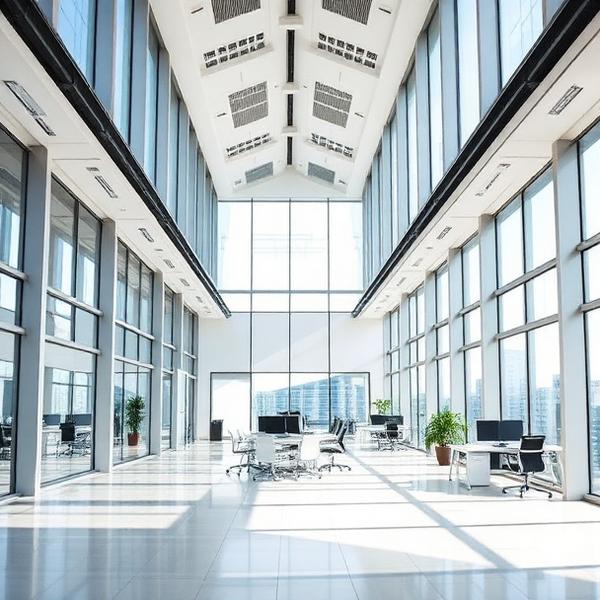
Open plan living has been the dominant aspiration in residential design for over two decades, driven by architecture magazine imagery from Scandinavia and North America that shows large, light-filled spaces where living, dining, and kitchen areas flow seamlessly into each other. In the Indian context, however, this image-driven aspiration often collides with practical realities that those magazine photographs never show. The result can be homes that look good in developer brochures but feel uncomfortable and impractical to live in day to day.
This guide examines the genuine advantages of open planning, the specific challenges it creates in Indian homes, and the design strategies that produce layouts that are both spatially generous and practically functional.
The Real Advantages of Open Plan Layouts
Open planning delivers meaningful benefits when it is done thoughtfully. The most significant are spatial, social, and practical.
Visual spaciousness: Removing walls between kitchen, dining, and living areas creates a sense of space that is disproportionate to the actual area added. A 250 sq ft combined living-dining-kitchen area feels significantly larger than three separate 100 sq ft rooms covering the same total area. In India's urban residential market, where plot areas are often constrained, this visual enlargement is genuinely valuable.
Social connectivity: Open plans allow family members and guests to connect across activities — the person cooking can participate in conversations happening in the living area, and children doing homework at the dining table are within sight of parents in the kitchen. This connectivity suits the social nature of Indian family life and entertained hospitality.
Natural light distribution: Open plans allow daylight from windows on one side of the building to reach deep into the floor plate. A kitchen in an enclosed room might rely on artificial light even on bright days; the same kitchen open to a south-facing living room benefits from reflected natural light throughout the day.
The Indian-Specific Challenges That Matter Most
The challenges of open planning in Indian homes are real and should be addressed in the design rather than ignored.
Cooking Smells and Fumes
Indian cooking involves techniques — high-heat tadkas, slow-cooked curries, aromatic spice preparations — that generate significantly more smoke, steam, and smell than the light cooking typical of the homes shown in most open plan inspiration imagery. In an enclosed kitchen, these smells are contained. In an open plan layout without adequate extraction, they permeate the entire living area and linger for hours.
This is not an argument against open kitchens — it is an argument for taking kitchen ventilation design as seriously as any architectural element. An externally ducted cooker hood with adequate extraction rate (typically 800 to 1,200 cubic metres per hour for Indian cooking intensities) makes an open kitchen workable. A recirculating filter or an undersized hood does not.
Noise and Acoustic Privacy
Open plans have no acoustic separation between zones. The noise of cooking — pressure cooker, exhaust fan, utensil handling — carries directly into the living and study areas. Television sound from the living room penetrates into areas where others are trying to concentrate. For households with multiple generations or different schedules, this acoustic openness can create genuine friction.
Privacy and Multi-Generational Living
Many Indian households include elderly parents, in-laws, or extended family members who may have different privacy expectations from younger household members. Open plans that feel liberating to a young couple can feel uncomfortable for an elderly parent who values having a defined, enclosed space where they can sit and retreat.
Semi-Open Plans: The Indian Sweet Spot
The most successful contemporary approach for Indian homes is not fully open or fully enclosed but a semi-open layout — sometimes called "broken plan" — that provides visual connection and spatial generosity while maintaining the ability to close off areas when needed.
Practical devices for semi-open planning include: sliding or folding partitions between kitchen and dining that open fully for entertaining and close during heavy cooking; partial-height joinery elements that define zones without blocking light or view; double doors between living and TV room that can be left open as a default while allowing closure for acoustic privacy; and screen walls or pergola-style elements in open plan spaces that define activity zones without full enclosure.
Designing the Open Plan Kitchen for Indian Use
If there is one space in an Indian home that demands special design attention in open plan layouts, it is the kitchen. The following principles are essential.
- Position the cooking zone — especially the hob — at the end of the open plan space furthest from the living area, and adjacent to an exterior wall where an exhaust duct can be run directly outside
- Specify a cooker hood with external ducting at sufficient extraction rate for Indian cooking volumes
- Consider a glazed or sliding partition behind the hob that can be closed during heavy cooking while maintaining visual connection
- Design generous counter and storage space so the kitchen can be kept visually clean — clutter is magnified in open plans
- Use flooring material changes to define the kitchen zone within the open plan without requiring walls
For more on how interior design and architecture interact in spaces like open plan kitchens, read our detailed discussion of interior design versus architecture and what comes first.
How Natural Light Changes in Open Plans
One of the most significant benefits of open planning — natural light distribution — is also one that requires conscious design to realise fully. Simply removing walls between rooms does not automatically improve light if the windows themselves are not well-positioned.
In an open plan, the architect has an opportunity to pull light from multiple sides of the building into a single visual field. A south-facing clerestory window that washes light across the kitchen ceiling, combined with east-facing glazing in the living area, creates a layered lighting quality in the combined space that no enclosed kitchen-dining-living arrangement could match.
Understanding the full potential of natural light strategies is explored in our guide on the role of natural light in modern architecture.
To explore how our team designs open and semi-open plans for Indian households, visit our projects page or contact us to begin discussing your home.
See our work: Westro Villas in Attapur and Ishanya Infra Villa Development.
Frequently Asked Questions
Does open plan living work in smaller Indian apartments?
Open plan layouts can work well in smaller apartments when the kitchen is designed with strong extraction ventilation to contain cooking smells, and when the layout allows acoustic separation through furniture placement and soft furnishings. In apartments under 900 sq ft, the visual spaciousness that open planning creates genuinely improves the livability of the space.
How do I manage cooking smells in an open plan kitchen in India?
A high-powered kitchen hood with external exhaust — not a recirculating filter type — is essential for open plan kitchens in India where cooking involves high-heat, aromatic preparation. The extraction rate should be sized for the actual cooking load, which is typically higher in Indian homes than Western-style cooking standards. Designing the kitchen at one end of the open plan space, near an exterior wall, also helps limit smell migration.
Is open plan living compatible with Vastu Shastra requirements?
Open plan layouts present challenges for strict Vastu zoning, which assigns specific functions to specific zones of the building. However, experienced architects can achieve functional open planning while maintaining Vastu-compliant placement of key elements — the kitchen in the south-east, the pooja space in the north-east — by using visual and spatial cues to define zones within the open plan rather than relying on walls.