Sustainable architecture in India is often reduced to a checklist of features — solar panels, rainwater harvesting, LED lighting — without addressing the deeper principle that makes a building genuinely sustainable. Real sustainable architecture asks how a building can serve its occupants well while consuming as few resources as possible across its entire lifespan. In the context of rapidly urbanising Indian cities, the stakes of getting this right have never been higher.
What Sustainable Architecture Actually Means
The word "sustainable" in architecture refers to a building's ability to meet present needs without compromising the ability of future generations to meet theirs. In practice, this covers three interconnected dimensions: environmental performance, resource efficiency, and occupant wellbeing.
Environmental performance means minimising a building's contribution to greenhouse gas emissions and urban heat island effects — primarily through reduced energy consumption and thoughtful material choices. Resource efficiency means using land, water, and materials as effectively as possible. Occupant wellbeing means ensuring that the drive for efficiency does not produce austere, uncomfortable, or unhealthy spaces.
A building that achieves all three is not only better for the environment — it is a better building. This is the key insight that transforms sustainability from a constraint into a design driver.
Passive Design: The Foundation of Sustainable Buildings
Before any technology is specified, sustainable architecture begins with passive design — the art of using a building's form, orientation, materials, and openings to create comfortable conditions without mechanical assistance.
In India's varied climate zones, passive design looks different region by region. In hot-dry climates like Rajasthan, it means thick walls, minimal openings, and courtyards that create cool microclimates. In hot-humid coastal climates like Chennai, it prioritises cross-ventilation and shade with minimal thermal mass. In composite climates like Hyderabad, good passive design addresses both the intense summer heat and the monsoon humidity with a nuanced approach that no single-climate strategy can provide.
Key Passive Design Principles
- Orientation: Positioning the building so that the longest facades face north and south minimises direct sun exposure on walls and maximises the effectiveness of overhangs.
- Shading: Deep overhangs, external louvres, and deciduous trees block summer sun while admitting winter light.
- Thermal mass: Heavy materials like concrete, brick, and stone absorb heat during the day and release it slowly at night, stabilising indoor temperatures.
- Cross-ventilation: Openings on opposite faces of the building create natural airflow that removes heat and humidity without mechanical fans.
Material Choices and Embodied Carbon
The embodied carbon of a building — the carbon dioxide emitted during the extraction, manufacture, and transport of all the materials used in its construction — is gaining increasing attention in Indian architecture. Studies suggest that embodied carbon in buildings can account for 50% or more of their total lifecycle carbon in well-operated, energy-efficient buildings.
For Indian architects, this creates both a challenge and an opportunity. Conventional Indian construction relies heavily on cement, which is carbon-intensive to produce. Alternatives that reduce embodied carbon include fly-ash blended concrete that uses industrial byproducts, compressed earth blocks and rammed earth for low-rise structures, locally sourced stone that minimises transport emissions, and bamboo and engineered timber for appropriate structural applications.
Material selection in sustainable architecture is not about using exotic or expensive alternatives — it is about choosing the right material for the job and sourcing it as locally as possible. An architect who considers lifecycle impact when specifying materials is practicing sustainable architecture regardless of whether the project carries a green certification.
Water Management in Indian Buildings
Water scarcity is an increasingly urgent issue in Indian cities. Hyderabad, Bengaluru, Chennai, and Delhi all face seasonal water shortages that are likely to intensify. Sustainable architecture addresses this through both supply and demand strategies.
On the supply side, rainwater harvesting systems collect monsoon rainfall from roofs and store it for non-potable uses like toilet flushing, garden irrigation, and groundwater recharge. Greywater recycling systems treat water from sinks and showers to the quality needed for similar non-potable purposes. These systems can reduce a household's dependence on municipal supply by 40 to 60 percent in cities with moderate to high rainfall.
On the demand side, low-flow fixtures, waterless urinals, drought-resistant planting, and drip irrigation all reduce consumption. Together, supply and demand measures make a building far more resilient to the water supply disruptions that are already common in many Indian cities.
For buildings in Hyderabad specifically, the combination of passive cooling and water harvesting is particularly powerful. Read our article on green roofs, passive cooling, and climate-responsive design in Hyderabad for a detailed look at how these strategies work in the city's climate.
Green Building Certifications in India
India has two major green building rating systems that provide independent assessment of a building's sustainability performance. GRIHA (Green Rating for Integrated Habitat Assessment), developed by The Energy and Resources Institute (TERI) with the Ministry of New and Renewable Energy, is calibrated specifically for Indian climate zones and construction practices. LEED (Leadership in Energy and Environmental Design), developed by the US Green Building Council, has a strong presence in Indian commercial construction.
Both systems evaluate buildings across similar categories: site planning, energy efficiency, water efficiency, material specification, and occupant health. A GRIHA or LEED rating does not guarantee a well-designed building, but the process of pursuing certification forces systematic thinking about performance across these dimensions.
For residential buildings, certification is less common in India but is gaining traction among environmentally conscious clients who want independent validation of their home's performance claims.
Why Sustainable Architecture Matters Urgently for Indian Cities
India is in the midst of an unprecedented urbanisation wave. Over the next 25 years, the country is expected to add more than 400 million urban residents. Every building constructed to serve this growth embeds decisions about energy, water, and carbon that will play out over 50 to 100 years.
Buildings in India currently account for approximately 33 percent of total electricity consumption, with commercial and residential cooling representing the fastest-growing component. If this growth continues without improvement in building performance, the energy and water demands of India's building stock will create economic and environmental burdens that compromise the quality of urban life for everyone.
The good news is that the tools exist to build much better. The design knowledge, material availability, and construction capability needed to build sustainably in India are all accessible today. The primary barrier is not technical — it is the inertia of standard practice and the tendency to optimise for upfront cost rather than lifetime value.
Understanding how modular construction methods can complement sustainable design goals is also worth exploring if you are considering building in India.
At CITRA Associates, sustainability is not a service add-on. It is fundamental to how we design. Visit our services page to learn how we integrate these principles, or contact us to discuss how they apply to your specific project.
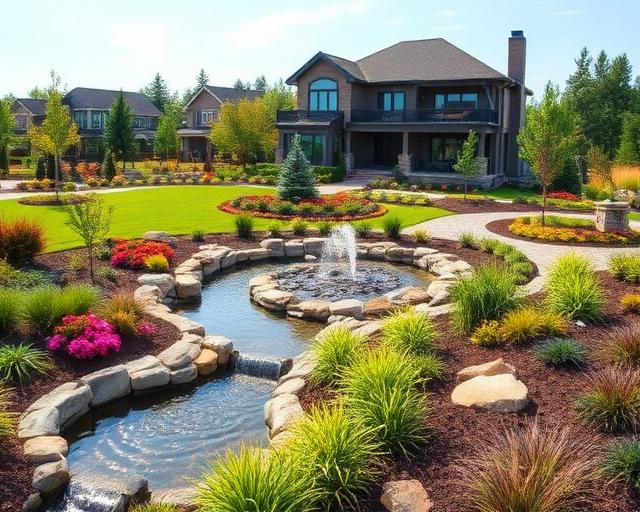
See our work: our ISKCON Master Plan project in Nerella and Vesella Meadows landscaping project.
Frequently Asked Questions
Does sustainable architecture cost more to build in India?
Passive sustainable strategies like orientation, window placement, and shading add minimal upfront cost while reducing lifetime energy bills significantly. Active systems like solar panels have higher upfront costs but strong payback periods, typically 5 to 8 years in most Indian cities. The total cost of ownership of a sustainably designed home is almost always lower than a conventional equivalent.
What is GRIHA and LEED certification for buildings in India?
GRIHA (Green Rating for Integrated Habitat Assessment) is India's national green building rating system developed by TERI, while LEED is an internationally recognised standard. Both evaluate buildings on energy performance, water efficiency, material use, and indoor environmental quality. GRIHA is specifically calibrated for Indian climate zones and construction practices.
Can a small residential home in India be designed sustainably?
Absolutely. Sustainable design principles apply at every scale. For a modest residential home, passive strategies — correct orientation, cross-ventilation, shading, and thermal mass — are the most impactful and cost-effective interventions. A well-designed 1,200 sq ft home can outperform a poorly designed 3,000 sq ft one in both comfort and energy use.