Hyderabad is classified as a composite climate zone — hot and dry in summer, warm and humid during the monsoon, and pleasantly mild in winter. This combination creates both challenges and opportunities for building design. The challenges are significant: summer temperatures regularly exceed 40°C, solar radiation is intense, and a growing urban heat island effect is making the city's core progressively hotter year on year. The opportunity is that a building designed intelligently for this climate can be comfortable for a large portion of the year without any mechanical cooling at all, and dramatically reduce the cooling load it does require.
Understanding Hyderabad's Climate Challenges for Buildings
Hyderabad's thermal challenge for buildings has three primary components. First, intense solar radiation — particularly on roof and west-facing wall surfaces — drives large amounts of heat into buildings during the summer months. Second, the lack of significant wind during the hottest period makes passive air movement limited. Third, the monsoon humidity, while cooling temperatures somewhat, makes evaporative cooling strategies less effective than in purely hot-dry climates.
Conventional construction in Hyderabad has historically addressed these challenges almost entirely with mechanical air conditioning — an approach that works but creates a cycle of increasing energy demand, rising electricity bills, and worsening urban heat island effect as rejected heat from air conditioning units is added to the outdoor environment.
Passive cooling strategies break this cycle by designing the building itself to stay cool, reducing the frequency and duration of mechanical cooling needed.
Green Roofs: Cooling from the Top Down
A green roof — a planted layer installed on a flat or low-pitched roof — provides one of the most effective passive interventions available to Hyderabad buildings. The mechanism is straightforward: the soil substrate and plant cover insulate the roof slab from direct solar radiation, and the process of plant transpiration (plants releasing water vapour through their leaves) actively cools the roof surface through evaporation.
Studies in similar hot composite climates have shown that green roofs can reduce roof surface temperatures by 20 to 30°C compared to unplanted surfaces, and reduce internal temperatures in the room below by 3 to 5°C. For the top floor of a residential building — often the hottest floor during summer — this is a transformative improvement in comfort without any energy consumption.
Green Roof Considerations for Hyderabad
Implementing a green roof in Hyderabad requires attention to several local factors. Structural loading must be designed for during the original building design — the additional weight of substrate, plants, and water is typically 100 to 200 kg per square metre for a lightweight (extensive) green roof. Waterproofing quality is critical; green roofs must be installed over a robust, root-resistant waterproofing system.
For Hyderabad's dry summer months, irrigation provision is necessary to maintain plant health and the associated evaporative cooling benefit. Drought-tolerant plant species — sedums, succulents, and locally adapted groundcovers — minimise irrigation requirements while maintaining sufficient cover to deliver the thermal benefit.
Roof Insulation: The Single Highest-Return Passive Strategy
For buildings where a green roof is not practical, thermal insulation of the roof slab offers the most cost-effective passive cooling improvement available. The roof is the surface that receives the highest solar radiation in a horizontal city like Hyderabad, and an uninsulated concrete slab stores and conducts this heat directly into the space below.
Adding 75 to 100 mm of extruded polystyrene or polyisocyanurate board insulation under the roof waterproofing — or on top of the slab with a screed topping — reduces heat transfer into the building dramatically. The payback period on this investment, through reduced air conditioning costs, is typically 3 to 5 years. Over the building's lifetime, the cumulative energy savings are substantial.
Wall Insulation and Thermal Mass
Beyond the roof, external wall insulation reduces solar heat gain through the building envelope. In Hyderabad's composite climate, the appropriate wall strategy depends on the orientation.
West-facing walls receive intense afternoon sun and benefit most from insulation — either cavity wall construction, insulated plaster systems, or external insulation composite systems (EICS). The goal is to prevent heat from entering the building while the sun is shining, and to allow the wall to cool down during the night.
Heavy masonry walls — brick, stone, or concrete block — provide thermal mass that absorbs daytime heat and releases it slowly. In Hyderabad's climate, this is most beneficial when the building can be ventilated at night to remove the stored heat before the next day's solar gain cycle begins.
Cross-Ventilation and Passive Air Movement
Natural cross-ventilation — the movement of air through a building driven by pressure differences between windward and leeward openings — is effective in Hyderabad during the cooler evenings and nights, and during the monsoon season when prevailing winds are consistent from the south-west.
Designing for cross-ventilation requires openings on opposite or adjacent faces of the building that align with prevailing wind directions. Operable windows at low and high levels in the same space create stack-effect ventilation that works even when wind is absent: hot air rises and exits at high level, drawing cooler air in at low level.
Understanding how natural light and ventilation interact in building design is explored further in our article on the role of natural light in modern architecture — many of the same aperture decisions that control daylight also determine ventilation performance.
Shading: The First Line of Defence
Before any other passive cooling measure, shading is the most effective way to keep solar radiation from entering the building in the first place. External shading — overhangs, fins, screens, and vegetation — prevents solar gain at the window before it becomes heat inside the building. Internal blinds and curtains are far less effective because by the time sunlight has passed through glass, the heat energy is already inside.
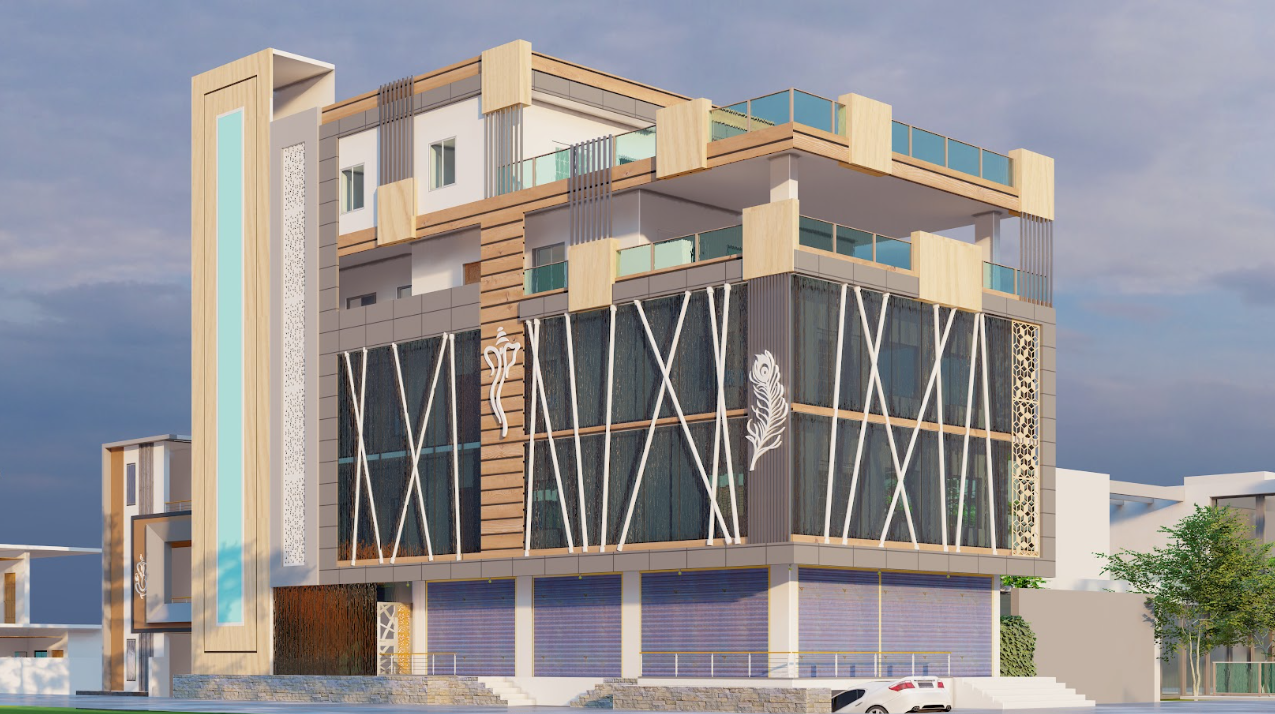
For Hyderabad buildings, deep roof overhangs on south and east facades (600 to 900 mm for standard floor-to-ceiling heights), vertical fins on east and west facades, and external louvres or jali screens on west-facing windows are the most impactful shading interventions.
Vegetation — both climbers on trellises against walls and trees planted to shade the building's perimeter — provides shading that also contributes to local microclimate cooling through transpiration. A single large tree shading a west-facing wall can significantly reduce afternoon heat gain while improving the building's visual and spatial relationship with its garden.
For a broader discussion of sustainable architecture in Indian cities, including how these strategies fit into a whole-building approach, read our article on what sustainable architecture means in Indian cities. To see passive cooling strategies applied in completed projects, visit our projects page and explore our residential portfolio. You can also discuss how these strategies might apply to your own site by contacting us.
See our work: our Roof Top Garden project and Vesella Meadows landscape design.
Frequently Asked Questions
Do green roofs work in Hyderabad's climate?
Yes. Green roofs are effective in Hyderabad because they provide significant roof insulation through the soil and plant layer, reducing heat gain into the building below. They also help manage monsoon stormwater runoff. The main challenges are structural loading and irrigation management during Hyderabad's hot, dry summer months.
How much can passive cooling reduce air conditioning costs in Hyderabad?
Well-executed passive cooling design in Hyderabad can reduce air conditioning runtime by 30 to 50 percent compared to a conventionally designed building of equivalent size. Passive cooling is most effective when combined with good cross-ventilation that allows the building to flush accumulated heat during cooler evening and night hours.
What is the most cost-effective passive cooling strategy for Hyderabad homes?
Roof insulation combined with correct building orientation gives the highest return on investment for passive cooling in Hyderabad. Adding 75 to 100 mm of rigid insulation below roof slab waterproofing dramatically reduces internal temperatures on hot days. This investment pays back through reduced air conditioning costs within 3 to 5 years.