Indian residential architecture is in the middle of a genuine shift. After decades of design choices driven primarily by maximising built-up area and following developer templates, homeowners are asking fundamentally different questions in 2025. How does this space feel? How much will it cost to cool? Does it support the way my family actually lives? The answers are reshaping everything from floor plan logic to material selection across the country's growing cities.
Biophilic Design: Bringing Nature Into the Home
Biophilic design — the intentional integration of natural elements, materials, and spatial experiences into the built environment — has moved from a luxury preference to a mainstream expectation in Indian residential architecture for 2025. The pandemic years accelerated this shift dramatically as homeowners spent more time at home and felt acutely the difference between spaces that felt connected to the outdoors and those that did not.
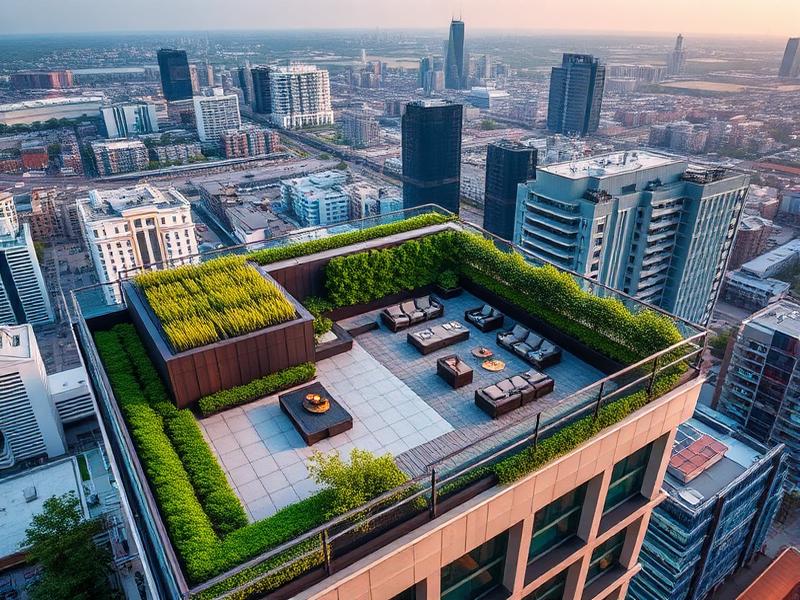
In practical terms, biophilic design in Indian homes means larger operable windows that frame garden or sky views, interior courtyards that bring light and vegetation into the home's core, natural material palettes featuring stone, timber, and terracotta, and green walls or planted terraces that blur the boundary between indoors and out.
The approach is equally valid in compact urban apartments and large independent villas. Even a well-placed window with a view of a single tree changes how a room feels. Architects working in this space understand that the goal is not decoration — it is restoring the sensory richness that dense urban living tends to strip away.
Compact, High-Performance Homes
India's land costs in tier-one and fast-growing tier-two cities have pushed the average residential plot size down significantly over the past decade. Rather than mourning this, the best architects and homeowners are treating it as a design constraint worth solving creatively.
Compact homes in 2025 achieve their performance not through size but through planning precision. Every square foot is assigned a clear purpose. Storage is integrated into structure. Multipurpose spaces reduce the need for dedicated rooms. Natural light and cross-ventilation replace the visual expansiveness that large square footage once provided.
The 1,500 sq ft Revolution
Some of the most thoughtful residential architecture now being built in cities like Hyderabad, Bengaluru, and Pune occupies plots under 150 square metres. These homes demonstrate that spatial quality and building area are not the same thing. The question is not how large the house is, but how well it is designed.
Climate-Responsive and Passive Design
Electricity bills, environmental awareness, and a genuine desire for comfort without constant mechanical systems have made passive design one of the most actively requested approaches in Indian residential architecture this year. Passive design strategies work with a location's climate rather than against it.
For Hyderabad, this means deep roof overhangs that keep low-angle summer sun off walls and glass, cross-ventilation layouts that encourage natural air movement through the home, high thermal mass materials that absorb daytime heat and release it slowly at night, and strategic planting that shades walls without blocking light.
The best passive homes reduce air conditioning run-time by 30 to 50 percent compared to conventionally designed buildings of the same size, without any sacrifice in comfort. The savings compound over the building's entire life. To understand more about these strategies in the context of Hyderabad's climate, read our detailed guide on green roofs, passive cooling, and climate-responsive design in Hyderabad.
Vastu Principles Meeting Contemporary Design
The integration of Vastu Shastra into modern home design is not new in India, but the quality of that integration is improving considerably. In 2025, the most interesting residential architecture finds ways to honour Vastu principles — orientation, room placement, natural element ratios — without treating them as a rigid cage that dictates every design decision.
Architects who understand Vastu deeply can often achieve compliance while improving a floor plan's functional logic, because many Vastu principles have a rational basis in sun orientation, natural ventilation, and spatial hierarchy that good architecture pursues anyway.
For homeowners who want to understand this balance in depth, our article on Vastu-compliant architecture and modern design explains how contemporary studios navigate this territory.
Smart Home Integration That Serves Daily Life
Smart home technology has been promised in Indian residential design for years, but 2025 marks the moment it is becoming genuinely useful rather than merely demonstrative. The change is not in the technology itself but in how architects integrate it — as a layer that enhances life rather than a feature list that impresses at first walk-through but complicates daily use.
The most practical applications gaining traction include automated ventilation that responds to indoor air quality and occupancy, lighting systems that adjust colour temperature across the day to support sleep rhythms, water management systems that monitor consumption and flag leaks, and integrated security that does not require app management for basic functions.
The guiding principle for smart home design in 2025 is that technology should be invisible until needed and dependable when it is. Homes that require owners to manage multiple apps or that break when internet connectivity drops are being replaced by architecturally integrated systems that work passively and reliably.
Material Honesty and Regional Identity
A quiet but meaningful trend in Indian residential architecture for 2025 is the return of material honesty — the practice of using materials in ways that reveal their nature rather than concealing it. Exposed concrete that celebrates its texture, brick left visible rather than plastered, timber used structurally rather than decoratively — these choices result in homes that feel grounded and authentic rather than striving for a generic international aesthetic.
Alongside material honesty runs a renewed interest in regional identity. Architects are increasingly drawing on the craft traditions, material vernaculars, and climatic wisdom of the regions they build in. In Telangana and Andhra Pradesh, this means reconsidering the role of lime plaster, local stone, and shaded transitional spaces like verandahs and chowks that have served the climate well for centuries.
This is not nostalgia. It is the recognition that buildings that belong to their place — climatically, materially, and culturally — tend to age gracefully, perform better, and feel more meaningful to the people who live in them.
If you are exploring how these trends might apply to your own project, our team at CITRA Associates would be glad to discuss possibilities. Visit our services page to understand the range of design work we undertake, or contact us directly to begin a conversation.
See our work: Nikita's Villa and Varahi Homes Nizamabad.
Frequently Asked Questions
What is the biggest residential architecture trend in India right now?
Biophilic design — integrating natural light, plants, natural materials, and views of greenery into the home — is currently the most influential trend in Indian residential architecture. It is being applied across all budget levels, from compact urban apartments to large independent villas.
Are Indian homeowners adopting sustainable architecture in 2025?
Yes, significantly. Rising electricity costs, increasing awareness of climate change, and the growing availability of solar panels and energy-efficient materials have made sustainability a mainstream consideration rather than a niche choice among Indian homeowners, particularly in cities like Hyderabad, Bengaluru, and Pune.
Is open plan living still popular in Indian homes in 2025?
Open plan living remains popular but is increasingly being tempered by the practical realities of Indian homes — cooking smells, noise, and the need for privacy in multi-generational households. The trend in 2025 is toward semi-open layouts that offer visual connection between spaces while allowing functional separation.